
How to Buy Bitcoin & Crypto with Merrill Edge
Summary: Merrill Edge offers Bitcoin only as a fund. Its broader crypto menu adds trusts and crypto-linked stocks, and since January 2026 an advisor can recommend a Bitcoin ETP unprompted. None of it is a coin you can withdraw, stake, or move on-chain.
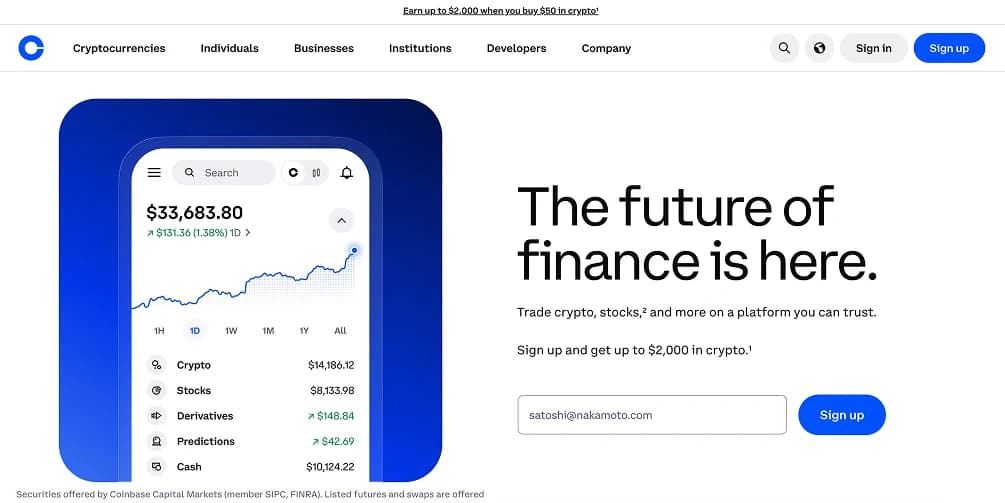
For coins you control, we fund Coinbase instead. It trades on the Nasdaq as COIN, holds a New York BitLicense and trust charter, takes free ACH, and lists 260+ withdrawable assets plus CFTC-regulated perpetual futures no brokerage matches.
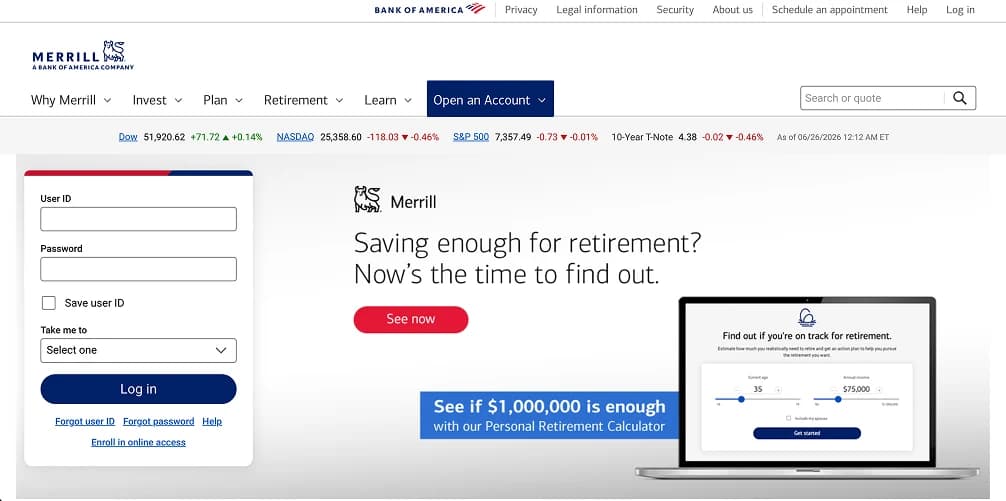
Merrill Edge is a broker-dealer rather than a bank, so its transfer service cannot pay an exchange directly. You sweep funds to the Bank of America checking account on your login, which lands instantly, then deposit from there.

Best Alternative to Merrill Edge: Coinbase
Coinbase is the better fit for owning crypto outright. It is publicly listed, ACH is free, its Advanced tier sits below any crypto ETP's expense drag, and you can withdraw the coin to your own wallet.
Licensing & Regulation
Nasdaq-listed (COIN), NY BitLicense, FinCEN-registered MSB
Supported Assets
260+ cryptocurrencies, plus CFTC-regulated futures
USD Deposit Methods
ACH (free), Wire, Debit Card, PayPal
Can I Buy Bitcoin with Merrill Edge?
Not as a coin. Merrill Edge has no spot crypto desk and no custody. Inside a brokerage or IRA it lists spot Bitcoin and Ether ETPs like IBIT, FBTC, and ETHA, crypto trusts, and stocks such as Coinbase (COIN) and Strategy (MSTR), all commission-free. Since 5 January 2026, advisors can also recommend four spot Bitcoin ETPs unprompted, all on our Bitcoin ETF tracker.
Those funds are securities. They carry SIPC coverage and 1099 reporting, but you never hold the asset, cannot move it on-chain, and pay a yearly expense ratio for the wrapper. For Bitcoin you can withdraw, stablecoins you can spend, or staking yield, you fund a regulated US exchange and buy there. We have done this from a Bank of America account on a Merrill login repeatedly with no block.
What trips up most Merrill clients is the first hop. The transfer service needs a matching account holder on both ends, so you cannot ACH from the brokerage straight to Coinbase. Sweep the cash to your Bank of America checking first, which clears in seconds under the shared parent, then fund the exchange.
How to Buy Crypto with Merrill Edge
The cheapest way to own Bitcoin here runs through Bank of America. Sweep dollars to your paired checking account, ACH them into Coinbase, and trade on the Advanced view. Both deposit legs cost nothing, and Advanced undercuts the spread on any simple Buy button.
Steps to buy crypto with Merrill Edge:
- Open a Coinbase account: Sign up on Coinbase and verify with your legal name, Social Security number, and a government ID. Every regulated US exchange requires this.
- Sweep cash to Bank of America: In Merrill Edge, move settled cash to your linked Bank of America checking account. It posts instantly. Only uninvested cash moves, so sell and settle any position first.
- Link Bank of America to Coinbase: In Coinbase, add a payment method and pick Bank Account (ACH). Sign in to Bank of America through the secure prompt so Coinbase reads your account details via Plaid and unlocks instant buying power.
- Fund the account: Push the dollars by ACH, free on both ends and tradable right away, with full settlement in one to three business days. For a same-day buy at size, a Bank of America wire clears immediately, though Coinbase charges $10 to receive one.
- Buy crypto: Once the balance shows, use Coinbase's Advanced interface rather than the basic buy screen. The basic screen buries a spread that pushes the all-in cost past 1%, while Advanced trades the order book near 0.40% maker and 0.60% taker at the entry tier. Above a small first order, we set a limit price.
Fees and Transfer Limits for Merrill Edge Customers
Your total cost is the transfer leg plus the exchange leg. For Merrill clients, the transfer leg needs the planning, since cash passes through Bank of America rather than leaving the brokerage directly.
Merrill Edge and Bank of America costs
- Merrill to Bank of America sweep: Free and instant, because both accounts sit under one parent. This is the leg that makes the whole thing painless.
- ACH out of Bank of America to Coinbase: Free, usually one to three business days to settle, available to trade sooner.
- Outgoing domestic wire: Merrill charges $24.95 per FED wire; a Bank of America consumer wire runs about $30 and is waived only at the top tier. Worth it only for same-day settlement on a large buy.
- Settled cash only: You can move uninvested cash, not the value of a position you still hold. Sell first, then sweep once it settles.
- Card funding: A Bank of America debit card works on most exchanges, but gateway surcharges run 1.5% to 3.99%, and its credit cards are treated as cash advances and usually declined for crypto. We keep cards for test deposits only.
- Fraud and AML checks: Bank of America flags first-time and unusually large transfers to exchanges, clearing them with a one-time passcode or a short hold. The one hold we hit came on a first transfer above $10,000 and released in a couple of minutes once the code went through.
Coinbase costs
- ACH deposit: Free.
- Wire: $10 incoming, $25 outgoing.
- Spot trading: Advanced runs roughly 0.40% maker / 0.60% taker and drops with 30-day volume; the basic buy screen costs more through its spread. Full breakdown in our Coinbase fees guide.
- Perpetual futures: Nano BTC and ETH contracts with taker fees from about 0.02%, up to 10x leverage, and no monthly expiry.
- Crypto withdrawal: Network fee only. USDC on a low-cost network is usually under a dollar.
- Cash withdrawal back to your bank: Free by ACH, $25 by wire.
A free sweep, a free ACH, and a sub-0.60% Advanced trade beat paying a yearly expense ratio on a Merrill Bitcoin ETP when you want the coin itself, and only the exchange lets you move it to a hardware wallet.
Best Exchanges for Merrill Edge Customers
US clients have several regulated venues, weighed here on licensing, asset range, and the real cost of a typical retail buy.
Coinbase earns the top spot for pairing the cleanest US onboarding with the widest reach. You get spot coins you can withdraw plus CFTC-regulated perpetual futures, which close the gap between US traders and the leverage products that dominate offshore.
New Yorkers keep most of that, since Coinbase and Gemini both serve New York residents.
Merrill Edge Cryptocurrency Policy
Bank of America ranks among the more crypto-receptive big US banks, and Merrill reflects that. Advisors can now pitch four spot Bitcoin ETPs unprompted, at a suggested 1% to 4% weighting for clients who can stomach the volatility.
Still, nothing inside a Merrill account holds an actual coin, there is no custody, and the self-directed platform has no futures desk. The exposure stops at funds and stocks, which Merrill marks as not FDIC insured, not bank guaranteed, and able to lose value.
Two peers have gone further. Charles Schwab and E*TRADE both turned on in-house spot Bitcoin and Ether trading in 2026, while Merrill kept its crypto inside the fund wrapper. For anyone who wants the asset rather than a proxy, a regulated exchange is the only path to a withdrawable coin.
The wider US backdrop moved fast through 2025. Congress passed the GENIUS Act framework for payment stablecoins, the CLARITY Act on market structure cleared the House and went to the Senate, and the OCC and FDIC confirmed banks may custody and trade crypto with proper controls.
Reporting tightened alongside it. Custodial brokers and every US exchange now file IRS Form 1099-DA for digital-asset sales, reporting gross proceeds for 2025 and cost basis from 1 January 2026. The IRS sees your disposals directly, so declaring crypto is no longer optional.
About Merrill Edge
Merrill Edge is the self-directed arm of Merrill, the wealth business of Bank of America. The brokerage entity, Merrill Lynch, Pierce, Fenner & Smith Incorporated, is a registered broker-dealer and investment adviser, Member SIPC, and a wholly owned Bank of America subsidiary. Linked banking products come from Bank of America, N.A., a Member FDIC.
Clients trade through merrilledge.com, MyMerrill, and the app under one Bank of America sign-on. That shared login is what makes funding work, since cash moves between a Merrill account and a Bank of America checking account instantly. Account types cover individual and joint brokerage accounts, Cash Management Accounts, and the full range of IRAs.
Online stock and ETF trades are commission-free, with broker-assisted orders at $29.95. The lineup spans equities, ETFs, options, mutual funds, and fixed income, plus the crypto ETPs and crypto-linked stocks that stand in for direct coins.
Bottom Line
At Merrill Edge, Bitcoin comes only as a fund, and since early 2026 an advisor can recommend one. You never get a coin you can hold, move, or trade with leverage.
Coinbase delivers all three. You own a withdrawable spot asset, trade it on Advanced below any ETP's expense drag, hold it in self-custody, and can use CFTC-regulated nano perpetuals for US leverage. Sweep cash to Bank of America, ACH it into Coinbase, and trade on Advanced to keep the all-in cost down.


.webp)
.webp)
